09.07.2025
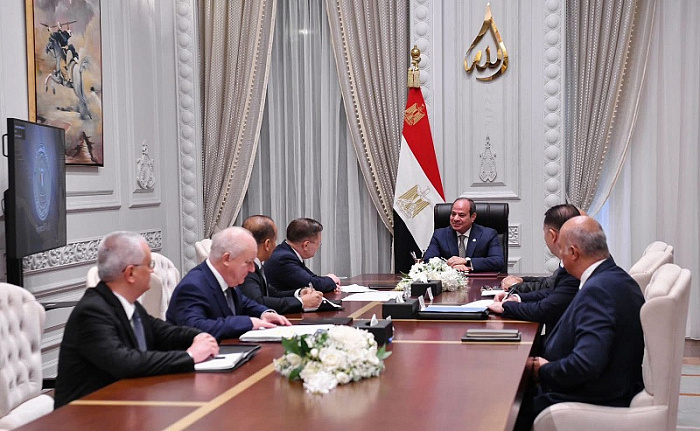
On July 8, 2025, Director General of the State Corporation Rosatom Alexey Likhachev paid a working visit to Egypt. During the visit, he held a meeting with the President of the Arab Republic of Egypt Abdel Fattah El-Sisi to discuss strategic cooperation between Russia and Egypt in the peaceful use of nuclear energy, as well as the ongoing construction of the El-Dabaa NPP.
“The construction of the El-Dabaa Nuclear Power Plant in Egypt is an absolute priority for us. Thanks to well-coordinated efforts between the Russian and Egyptian sides, full-scale construction and installation work is currently underway at all four power units. Over 24,000 people are involved in the project on a daily basis, the majority of whom are Egyptian nationals. This contributes to the development of local competencies and creates new jobs. We are confident that the successful implementation of the El-Dabaa NPP project will strengthen Russian-Egyptian relations, enhance Egypt’s energy independence, and lay the groundwork for continued technological partnership between our countries,” stated Alexey Likhachev.
During the meeting, mechanisms for Russian participation in developing the plant’s physical protection system were also outlined. At the headquarters of Egypt’s Ministry of Electricity and Renewable Energy, a signing ceremony was held for a Protocol amending the intergovernmental agreement on cooperation in the construction of a nuclear power plant in Egypt, as well as a supplemental agreement to the EPC contract between JSC Atomstroyexport (Rosatom’s Engineering Division and the general contractor for the El-Dabaa NPP project) and the Nuclear Power Plants Authority of Egypt.
The newly signed documents allow for Russian participation in the design, supply of equipment and materials, and the construction, installation, and commissioning activities required to establish the El-Dabaa NPP’s physical protection system. The site will be equipped with modern safety systems fully compliant with IAEA standards.